


A sense of nervous excitement. Visible is the frosty air emanating from my fellow runners as they do the "pre-race" jiggle on the start line.
A rapid twitch of the hips.
I'm lined up for my local weekly parkrun event and I'm serious. The countdown begins...
Wait a second. I need to start my tracker. As does the person next to me.
The person behind us sighs. I refuse to go until… there! GPS ready, and I'm running.
During the scramble, it's difficult to spot a arm without a fitness tracker on it. And this isn't only us runners who wear them.
It's a explosive, multi-billion pound sector. Brands like Apple Watch are prevalent, featuring an broad array of various models to cater to a spectrum of lifestyles. Depending on how feature-packed the watch you select, price tags can vary between a hundred pounds to a significant investment.
"It makes me crazy, I'm unable to switch off."
"It comforts me… It acts as a supporter guiding me."
"I wish it wouldn't say about a poor sleep."
A small sample of the responses I've had from like-minded tracker enthusiasts when I inquire what they feel about theirs.
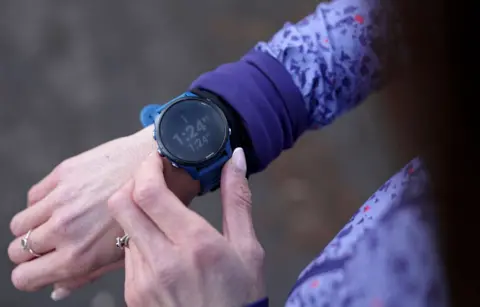
The Monitoring Conundrum
My current opinion on mine? Currently, annoying. It's telling me I'm off pace, leading me to doubt whether the overhead branches I'm running below are interfering with my location tracking.
Countless individuals of us strap these little devices onto our arms and wear them constantly, ostensibly comfortable with the fact they're continuously recording us.
Gone are the days when we depended on them only to give us an rough count of our pedometer reading. Currently, they can analyse our sleep patterns, heart rate, heart rate variability (HRV), our recovery score.
It's tricky to find a bodily function they aren't designed to measure.
But are they able to do what they claim to do? And are the statistics we analyse a faithful picture of our actual health? Do they boost our daily wellness, or do the multitude of readings and cheerleading alerts just increase our daily stresses?

A Complicated Bond
"I find myself getting a bit obsessed with mine," an individual confesses.
While she appreciates how her device records her exercise, she finds some of its other features "overwhelming" at times - a feeling that became apparent during a major life event.
Before she realised she could change its configuration, her smartwatch repeatedly informed her she was not being energetic enough. Now, the watch keeps telling her she's had a bad night's sleep.
"I have a young baby, there's no point to be informed my sleep was poor," she says. "I'm acutely aware perfectly well."
Why doesn't she just take it off?
"I could, I suppose, but I have this complicated dynamic with it," she says. "I value it for its exercise data, but I'm unsure whether the additional features it can now do is perhaps too much for me."
Inside the Device
Every device of smartwatch has its own unique way of measuring your bodily functions and processing your data, but the vast bulk use optical sensors on the back of the watch.
They typically emit minute LED lights onto your skin which can detect blood flow, recording your pulse rate. Higher-end devices detect changes in the electrical current that runs through the skin to gauge your recovery state.
The Professional Viewpoint
A professor says that overall for smartwatches, it's a "fine balance" - while the continuously improving tech could realistically prevent illness, "identifying issues before we notice anything", it could also turn us device users into the "worried well".
He points out that some of the latest wearables can perform tests like medical-grade monitoring, which constantly monitor how healthy the heart is. They can flag if someone is experiencing a heart arrhythmia, where there is irregular impulses in the heart causing an uneven pulse.
This does not necessarily indicate someone is imminently going to suffer a heart attack, but it can give an advance notice they might be more vulnerable of a blood clot in the years to come.
But how to understand these numbers is not straightforward. The expert fears that as more functions are added, people may struggle to fully contextualise their data.
"I remain sceptical that having the capacity to monitor so much data is such a positive development," he says.
A professor specialising in wearable tech concurs. A study into the influence of wearable tech on a specific group of heart condition patients suggested a minority of those who were given devices to monitor their heart health experienced heightened worry and were "more inclined to use medical services".
She observed a pattern with her patients - they saw a worrying figure on their watch. They felt anxious. Their BPM increased. They got even more concerned. They checked again, and their heart rate increased again.
"If we see data about ourselves that we don't really understand then, of course, we are going to become concerned," the psychologist says. "We look, we obsess - it becomes a self-fulfilling prophecy."


